Is +240 vs +260 Actually a Big Deal Over an F1 Season?
When it comes to betting on Formula 1, enthusiasts often get caught up in the minutiae of odds differences. A common debate is whether a seemingly small difference — like +240 versus +260 — truly matters in the grand scheme over an entire F1 season. The answer lies not in the raw numbers alone but also in understanding how these odds interact with implied probability, value, and the evolving narrative throughout a race weekend.
Understanding Price vs Prediction in F1 Betting
At its core, sportsbook odds represent the bookmaker’s judgement of an outcome’s likelihood, adjusted for their margin (the vig). Odds aren’t just predictions; they’re prices for a risk. That distinction matters. Comparing +240 and +260, superficially, suggests a minor difference, but what does it mean beneath the surface?
- Price: The odds at which the bookmaker offers a return.
- Prediction: An assessment of the true probability an event will occur.
Let’s bring in an example to ground this discussion.
Odds Implied Probability Example Scenario +240 29.41% Bookmaker suggests a roughly 29% chance +260 27.78% Bookmaker suggests a roughly 28% chance +500 16.67% Early-week odds for an underdog, for exampleThe difference between +240 and +260 means roughly a 1.6% difference in implied probability. On paper, this might seem negligible, but over an entire F1 season and multiple bets, this margin can have a material impact on your return on investment (ROI).
Implied Probability and Value: The Real Yardstick
Every bettor’s goal is to identify value, defined as when your estimate of the true probability is higher than the implied probability derived from the bookmaker’s odds. In simpler terms, if you think a driver has a 35% chance to win while the odds imply 29%, you might have found value.
Calculating Implied Probability:
Implied Probability = 100 / (Odds + 100)Using this formula, +240 converts to approximately 29.41% and +260 to 27.78%, which seems minor at first glance. But over 20 or more bets, consistently finding +260 versus +240 can change your cumulative ROI by notable percentages.
The key is your own prediction. To illustrate this, imagine you have a driver who’s a strong contender based on your analysis, and you estimate their chances for a given race at 30%. Betting at +240 (+240 means your stake returns $3.40 total for every $1 bet) offers slightly negative value relative to your estimate, and +260 offers better value, because 27.78% implied is below your 30% prediction.
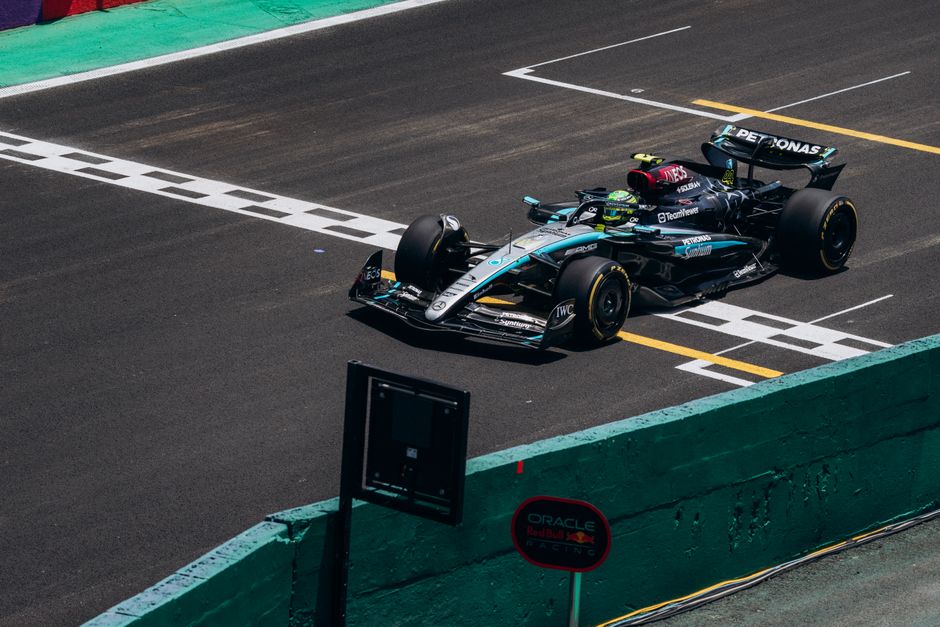
Conversely, if your estimates are off, notably overoptimistic, chasing small pricing advantages like +260 doesn’t help. This is why quality prediction models and ongoing data assessment are crucial.
Information Checkpoints Across an F1 Weekend
Formula 1 is dynamic. Odds adjust continuously during the race week based on new information and market behaviour. Understanding these information checkpoints will help you compare sportsbook odds effectively and decide when to lock in your bet or wait.
- Monday Open: Odds open here, reflecting early expectations before practice data emerges.
- Practice Sessions: Teams run different programmes. Long runs, pace trends, and tyre data provide insights into race pace and reliability.
- Qualifying: The single most impactful event for race odds. Pole position tends to produce significant odds shifts.
- Pre-Race Adjustments: Weather, grid penalties, and last-minute tech updates continue to tweak market lines.
Let’s say early week odds for a driver to win the next Grand Prix sit at +500 — these reflect initial speculation without much data. As practice progresses and the driver looks competitive, odds shorten to +260 or +240. Being patient to see qualifying effects is crucial because this session drastically reshapes the probability landscape.
Qualifying Impact on Odds
Qualifying in F1 sportsbook market coverage is not just about speed; it sets up the entire race narrative. A pole sitter is typically the favourite, and bookmakers adjust the line accordingly. For example, a driver initially pegged at +260 might shorten to closer to +140 after securing pole, reflecting the substantially improved chance of winning.
The shift isn't always symmetrical across the grid, either. A driver with strong race pace but poor qualifying might see little improvement in odds, or even worse pricing, indicating that market makers price in overtaking difficulty and track characteristics.
Understanding these nuances allows you to shop the line effectively across different sportsbooks. One bookie might have +240 while another offers +260 for the same driver post-qualifying, and this can represent a meaningful edge.
Line Shopping Sportsbooks: Why That +20 Odds Difference Matters
It’s tempting to ignore small odds differences like +240 compared to +260, especially in the heat of race week. But savvy bettors know that over a season-long portfolio, these add up. Here’s why this matters:
- Improving ROI: A small edge on each bet compounds. Over 20 or more bets, that +20 difference can translate to thousands of dollars in added profit.
- Bankroll Efficiency: With sharper prices, you can wager the same amount with optimized expected value, or even scale stakes more confidently.
- Market Timing: Being patient to line shop (e.g., waiting for qualifying impact) lets you capitalize on pricing inefficiencies.
Let’s consider a bankroll scenario. Suppose your model identifies 20 value bets across the F1 season, each with a 30% win probability:
Odds Implied Probability Expected Value (EV) per $100 bet +240 29.41% $30 x 2.4 - $70 x 1 = $2 (positive EV) +260 27.78% $30 x 2.6 - $70 x 1 = $8 (better EV)Over 20 bets, that’s $40 extra expected value, which can mean the difference between a winning season and one that just breaks even.
Key Takeaways
- Don’t dismiss seemingly small odds differences; they compound over a season.
- Always sanity-check implied probability against your true prediction.
- Use each F1 weekend milestone — practice, qualifying, and pre-race — as data checkpoints to refine your bets.
- Qualifying impact on odds is profound; recognising this helps with market timing and line shopping.
- Focus your bankroll on bets with clear value rather than chasing marginally shorter odds on uncertain predictions.
Final Thoughts
To answer the question succinctly: yes, a difference between +240 and +260 is meaningful over an F1 season, but only if you have robust predictions and a disciplined approach to betting. It’s not just about the odds number itself but about how you leverage it within your broader https://casinocrowd.com/whats-the-fastest-way-to-check-if-another-book-has-a-better-f1-number/ strategy — monitoring practice performance, qualifying outcomes, and moving around sportsbooks to snag the best line.
Betting on F1 isn’t a sprint—it’s a marathon. Treat the odds like prices and remember: the smallest advantage exploited consistently is what drives long-term ROI.
