What Should I Look For to Know If a Casino Game Is Physical or Software?
A casino game can look mechanical without using a mechanical device, and a physical game can be shown through a digital interface. The useful question is not simply “Does this look like a wheel or a set of reels?” It is: what is producing the outcome, and what evidence can I actually see?
That distinction matters when comparing physical vs software casino games. A live stream may show a real dealer handling cards or a ball moving around a roulette wheel. An animated slot may show familiar reels, symbols and win lines, even though the result is generated by software. In both cases, the screen is a presentation layer; it does not, by itself, explain how the game operates.
This guide offers a practical way to examine casino games through their objects, actions and layouts. It also separates what is visible—the visual convention—from what is happening—the mechanism that determines and records the result.
Start with the mechanism, not the picture
A physical game uses tangible equipment to carry out at least some central part of play. Depending on the game, that might include a roulette wheel and ball, cards dealt from a shoe, dice thrown onto a table, or mechanical reels that turn and stop. Players and staff interact with objects, and those objects help make the game’s actions observable.
A software game uses code to determine and manage the outcome. Its interface might depict a wheel, cards, dice or reels, but the depicted objects need not exist. Symbols can spin, bounce or stop in ways that imitate physical movement without any corresponding mechanism.
There are also hybrid arrangements. A live-streamed game may use physical equipment in a studio while software handles bets, displays account balances and records transactions. Conversely, software may animate a traditional-looking table without any live dealer or physical apparatus. So it is best to ask which parts are physical and which are digital, rather than classifying the whole experience from its appearance alone.
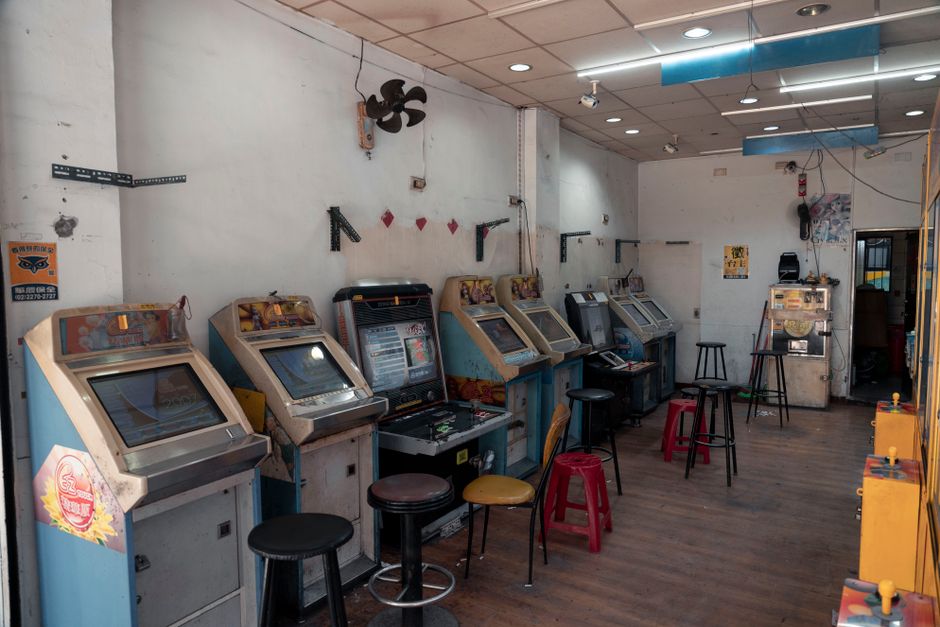
Look at what the equipment makes people do
Object-led history is a useful way to approach casino games. Instead of beginning with a game’s name or theme, look at the objects involved and the actions they organise. Equipment is not merely decoration. It can shape where people stand, what they touch, what they watch and when a round can proceed.
Physical equipment organises actions in space
At a roulette table, the wheel, ball, dealer and betting layout each have a role. The wheel provides the moving mechanism. The ball’s travel is visible to people gathered around it. The layout assigns places for bets, with numbered pockets and marked betting options linking the table surface to the wheel’s result. Players place chips in those areas; the dealer manages the round and handles the bets.
That spatial arrangement is functional equipment. The table is not just a background for the wheel. Its marked areas make different choices legible and give chips a shared, visible location. The position of the dealer and the placement of the wheel affect what players can see and how they take part.
Other games organise action differently. A card table brings dealing, collecting and revealing cards into view. A dice table gives the throw a defined surface and area. In each case, equipment helps establish what counts as a move, where it happens and who can observe it.
Software turns actions into interface steps
In a digital game, the equivalent actions may be taps, clicks or selections on a screen. A button can stand in for placing a bet. A programmed animation can stand in for a ball’s movement or a card’s reveal. The interface may use visual cues borrowed from a physical table, but the actions are mediated by software.
This can change the rhythm of play. A physical round might involve a dealer announcing a phase, players placing chips and a visible mechanism settling the result. A software game can compress those actions into a short sequence: choose a stake, press a button, watch an animation, see a result. The screen may preserve the familiar vocabulary while changing how the game is carried out.

What live streams can show—and what they cannot
Live streams are useful when they show physical equipment in use. A continuous camera view may reveal a dealer handling cards, a ball travelling around a wheel, or dice being thrown. Watch for visible interaction: hands changing the arrangement of objects, equipment responding to those actions, and the round progressing in real time.
Pay attention to the whole scene, not just a close-up. A camera may show the wheel but omit the betting layout, the dealer’s working area or the record display. Another view may show the table surface but crop out the object producing the outcome. A photo or stream showing only part of the equipment is limited evidence; say what is visible rather than assuming the rest.
Live video is evidence of a scene, not a complete explanation of the game’s operation. A stream can establish that physical objects are present and being handled, but it may not show how the result is captured, how bets are registered, or whether software plays a role behind the scenes. A digital overlay can display wagers and outcomes alongside physical play. That does not make the wheel or cards digital, nor does it mean every part of the experience is physical.
Questions to ask while watching
- Can I see the equipment that produces the outcome, or only a graphic representing it?
- Are people handling objects, and can I follow what they do from one stage of the round to the next?
- Does the camera show enough of the table to understand where bets are placed?
- Are numbers, cards or results displayed by a separate screen or overlay?
- Does the stream make a distinction between the live scene and the digital information added to it?
Animated reels are a digital representation
Animated reels are one of the clearest examples of why appearance and mechanism need to be kept separate. A slot interface may show three or more reels turning, symbols passing the screen and a winning combination aligning on a payline. That visual language recalls physical slot machines, but it does not demonstrate that physical reels are turning.
In a software slot, the reels are normally a digital representation: symbols are drawn and animated on a display, while software determines and presents the result. The animation can be designed to feel like a mechanical spin. It may include familiar sounds, pauses and movement, but these are presentation choices. They should not be treated as proof of a mechanical process.
Look for practical clues. Is the game presented entirely within a screen interface? Can the reels be resized, themed or replaced without changing a physical cabinet? Does the game display menus, bet controls and result histories in the same interface? These features point to a digital environment, though they do not explain every technical detail of how outcomes are generated.
Physical slot machines exist too. In those, visible reels may rotate inside a cabinet, or a cabinet may combine physical controls with a digital screen. A video of an animated slot, however, is not the same as a view of physical reels in operation. To make that claim, you would need evidence of the actual machine and its moving parts.
Visibility, handling and recording results
Casino equipment is designed around visibility and control as well as play. A physical object can make an action observable: a card is dealt, a die comes to rest, or a ball lands in a wheel pocket. Handling matters because people can see who touched what and when. Table layouts also keep bets in identifiable places, helping staff and players distinguish choices.
Recording results is a related design problem. A physical outcome still has to be communicated and recorded. A dealer may announce a result, move markers or settle chips. A screen may display the outcome and transaction history. In a software game, the record may be created within the system while an animation makes the result easy to follow.
These are separate functions. The mechanism produces or determines an outcome; the display makes it visible; the record preserves it. A screen showing a result does not prove that the result was produced by the objects pictured on the screen. Likewise, seeing a physical wheel does not tell you, by itself, how a digital betting account records the round.
When describing a game, keep those functions distinct. For example: “The stream shows a physical roulette wheel and a dealer, while an on-screen interface displays bets and results.” That is more precise than simply calling the entire game “physical.”
Roulette: read the wheel and the table together
Roulette is a useful case study because people often use “roulette wheel” as if every wheel and layout were the same. They are not. A single-zero wheel and a double-zero wheel have different numbered pockets, and table layouts can reflect the version being played. The layout is not a decorative mat: its marked areas organise the available bets and relate those bets to the wheel’s pockets.
When examining a roulette image or stream, look for both the wheel and the layout. Does the camera show the pocket sequence clearly? Is the betting surface visible? Are the marked options consistent with the version presented? If only a section of the wheel or table is shown, note that limitation. A close-up of a spinning ball may establish that a wheel is present, but it cannot tell you everything about the table rules or the full betting arrangement.
In a software roulette game, the interface may reproduce a historyfiles.co.uk wheel and a table layout. That is a digital representation of the familiar equipment. The displayed layout still helps players choose bets, but the image alone does not establish that a physical ball or wheel generated the outcome.
A practical checklist
- Identify the outcome-producing object. Is there a physical wheel, deck, die or set of reels visible, or is the object only depicted on screen?
- Follow the action. Can you see equipment being handled and the result emerging from that interaction?
- Check the framing. Is the full relevant setup visible, including the table or marked areas, or only a cropped portion?
- Separate layers. Note which elements are physical, which are animated, and which are informational overlays.
- Distinguish movement from mechanism. A convincing animation is still an animation unless there is evidence of a physical device moving.
- Look for result recording. Ask how the outcome is displayed and stored, without assuming that the display reveals how it was produced.
- Use cautious language. Describe what the source shows, then state what it cannot establish.
Use precise language when you describe what you see
The most reliable answer to “Is this casino game physical or software?” may be “partly both.” A live stream can show physical equipment in use while software manages betting and records results. An animated slot can imitate a mechanical machine without containing moving reels. A table layout can be a physical surface or a digital map of betting choices.
To judge the difference, start with the mechanism, then examine the actions it supports, the visibility of the equipment, the handling of objects and the way results are recorded. Treat live streams as evidence of what is shown in the frame, and animated reels as a visual convention unless physical machinery is actually visible. Most importantly, include the table and marked areas in your account: in many games, they are working parts of the equipment, not incidental scenery.